

















Diffusion Rayleigh : quand la physique colore la matière
Rayleigh scattering: when physics adds color to matter
Kevin Vynck (équipe MMCI), Amina Bensalah-Ledoux, Cécile Le Luyer et Anne Pillonnet (équipe MNP), en collaboration avec des collègues de Lyon et de Paris, ont publié un article intitulé "Structural Color Palette of Disordered Colloids in the Rayleigh Scattering Regime" dans la revue ACS photonics.
Kevin Vynck (MMCI team), Amina Bensalah-Ledoux, Cécile Le Luyer, and Anne Pillonnet (MNP team), in collaboration with colleagues from Lyon and Paris, have published an article titled "Structural Color Palette of Disordered Colloids in the Rayleigh Scattering Regime" in the journal ACS Photonics.
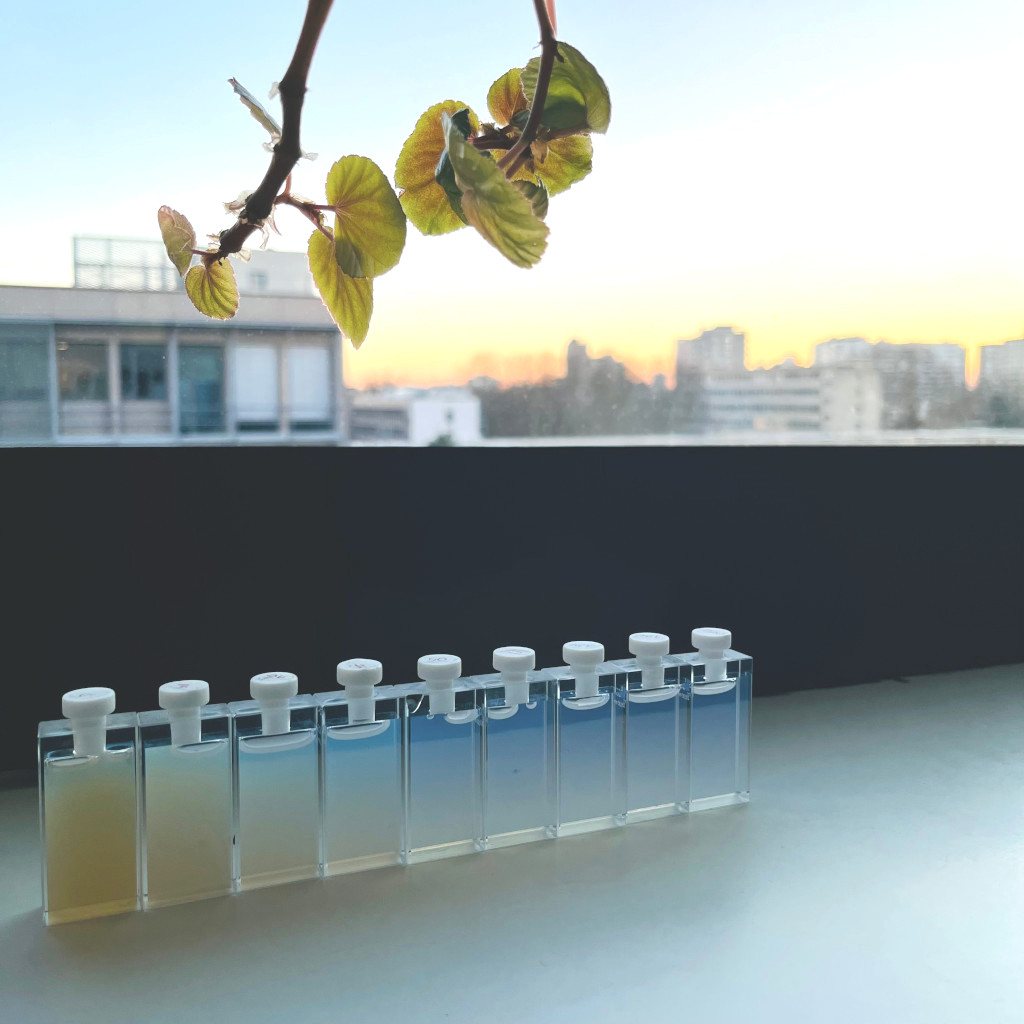
Le phénomène de diffusion Rayleigh permet d’expliquer la diversité des teintes du ciel mais se retrouve aussi dans le monde du vivant, où il engendre les colorations bleutées de certaines espèces animales, ainsi que dans le patrimoine artistique, des anciennes céramiques chinoises aux peintures flamandes de la Renaissance. Bien que ce mécanisme physique soit bien compris, la relation précise entre la structuration désordonnée d’un matériau à l’échelle microscopique et son apparence colorée à l'échelle macroscopique n'avait, jusqu'à présent, jamais été explorée de manière systématique.
Ce travail, qui allie modélisation théorique, chimie colloïdale, chimie douce et mesures optiques, offre un guide pratique pour concevoir et réaliser des matériaux colorés écologiques, entièrement dépourvus de pigments. Au-delà des applications industrielles, cette étude devrait faciliter l'analyse et la restauration d'œuvres d'art anciennes.
Ce travail, qui allie modélisation théorique, chimie colloïdale, chimie douce et mesures optiques, offre un guide pratique pour concevoir et réaliser des matériaux colorés écologiques, entièrement dépourvus de pigments. Au-delà des applications industrielles, cette étude devrait faciliter l'analyse et la restauration d'œuvres d'art anciennes.
The phenomenon of Rayleigh scattering explains the variety of colors in the sky, but it is also found in the natural world, where it gives rise to the bluish hues of certain animal species, as well as in the arts, from ancient Chinese ceramics to Flemish Renaissance paintings. Although this physical mechanism is well understood, the precise relationship between a material’s disordered structure at the microscopic scale and its colored appearance at the macroscopic scale had, until now, never been systematically explored.
This work, which combines theoretical modeling, colloidal chemistry, soft chemistry, and optical measurements, provides a practical guide for designing and producing eco-friendly colored materials that are entirely free of pigments. Beyond industrial applications, this study is expected to facilitate the analysis and restoration of ancient works of art.
This work, which combines theoretical modeling, colloidal chemistry, soft chemistry, and optical measurements, provides a practical guide for designing and producing eco-friendly colored materials that are entirely free of pigments. Beyond industrial applications, this study is expected to facilitate the analysis and restoration of ancient works of art.


L’IA dévoile des nouveaux biomarqueurs minéraux des maladies neurologiques
AI reveals new mineral biomarkers for neurological disorders
Augustin Tillement, François Lux et Olivier Tillement (équipe FENNEC), en collaboration avec des collègues de Lyon, Strasbourg et Hombourg ont publié un article intitulé "Artificial intelligence decodes brain elemental signatures to stratify aging and neurological diseases" dans la revue Research.
Augustin Tillement, François Lux and Olivier Tillement (FENNEC team), with colleagues from Lyon, Strasbourg and Homburg published an article entitled "Artificial intelligence decodes brain elemental signatures to stratify aging and neurological diseases" in the journal Research.
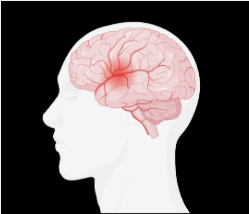
Avec l'âge, la composition en éléments minéraux du cerveau évolue progressivement, mais ces changements restent encore peu étudiés dans les maladies neurologiques. En analysant le liquide céphalorachidien et le sang de plus de 1600 personnes, il a été montré que le vieillissement s'accompagne de signatures minérales spécifiques reflétant notamment des modifications de la barrière qui protège le cerveau. Grâce à l'intelligence artificielle, des profils différents selon les maladies ont été identifiés, distinguant notamment les affections inflammatoires des maladies neurodégénératives. L'étude montre également que ces signatures évoluent différemment au cours de la vie selon les mécanismes pathologiques en jeu. En combinant ces informations avec les données cliniques conventionnelles, il est possible d'améliorer la précision du diagnostic. Ces travaux ouvrent la voie à de nouveaux biomarqueurs et à une médecine plus personnalisée pour les maladies neurologiques liées au vieillissement.
As the brain ages, its mineral composition gradually changes, yet these alterations remain poorly explored in the context of neurological diseases. By analyzing cerebrospinal fluid and blood samples from more than 1,600 individuals, researchers showed that aging is associated with specific elemental signatures, reflecting in particular changes in the blood–brain barrier, which protects the brain. Using artificial intelligence, distinct profiles were identified across different neurological conditions, notably distinguishing inflammatory disorders from neurodegenerative diseases. The study also revealed that these signatures evolve differently throughout life depending on the underlying pathological mechanisms. Combining elemental signatures with conventional clinical data improves diagnostic accuracy. These findings pave the way for the development of new biomarkers and more personalized approaches to the diagnosis and management of age-related neurological disorders.

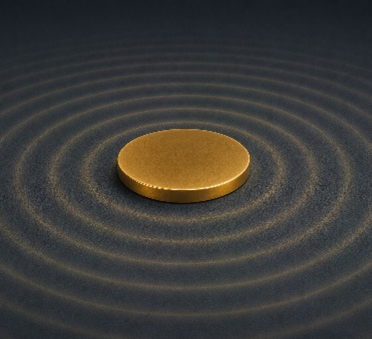

Comment s’atténuent les vibrations des nanoparticules?
How do nanoparticle vibrations decay?
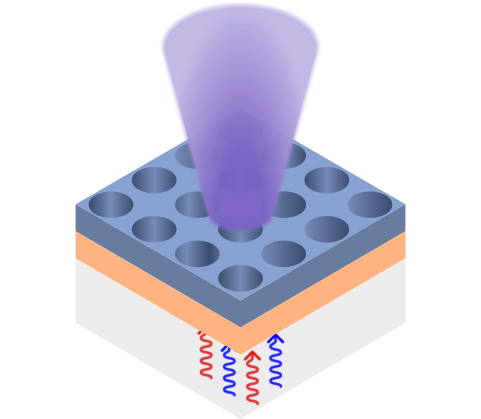
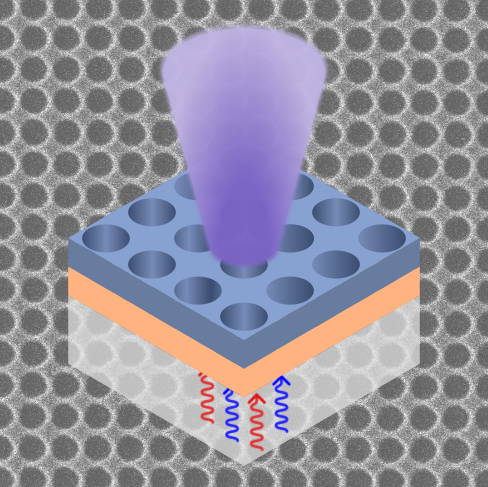
Nathan Berrit, Noëlle Lascoux, Clément Panais, Natalia Del Fatti et Aurélien Crut (équipe FemtoNanoOptics), en collaboration avec une collègue de Saclay, ont publié un article intitulé "Vibrational damping of single supported plasmonic nanodisks" dans la revue The Journal of Physical Chemistry Letters.
Nathan Berrit, Noëlle Lascoux, Clément Panais, Natalia Del Fatti and Aurélien Crut (FemtoNanoOptics team), with a colleague from Saclay, published an article entitled "Vibrational damping of single supported plasmonic nanodisks" in the journal The Journal of Physical Chemistry Letters.
Les résonateurs mécaniques jouent un rôle central dans des domaines variés tels que la détection, la métrologie et les télécommunications. Parmi eux, les nanoparticules métalliques se distinguent par plusieurs atouts notables : des fréquences de résonance extrêmement élevées, la possibilité d’exciter et de détecter optiquement leurs vibrations, ainsi qu’une synthèse aujourd’hui bien maîtrisée. Cependant, leurs performances restent souvent limitées par des facteurs de qualité mécanique relativement faibles, en raison du couplage avec le milieu environnant et de mécanismes d’amortissement intrinsèques.
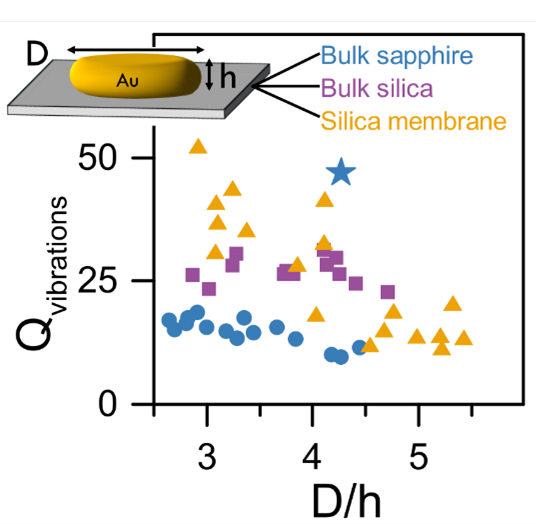
Dans ce contexte, les chercheurs de l’iLM ont étudié, en combinant techniques optiques et simulations numériques, l’amortissement vibrationnel de nanodisques d’or individuels déposés sur des substrats solides. Leur travail a permis de mieux comprendre l’influence de la géométrie des nanorésonateurs ainsi que des propriétés des substrats (composition et épaisseur). Ils ont également montré que certains modes faiblement excités peuvent présenter des facteurs de qualité significativement plus élevés que celui du mode dominant les signaux mesurés.
Dans ce contexte, les chercheurs de l’iLM ont étudié, en combinant techniques optiques et simulations numériques, l’amortissement vibrationnel de nanodisques d’or individuels déposés sur des substrats solides. Leur travail a permis de mieux comprendre l’influence de la géométrie des nanorésonateurs ainsi que des propriétés des substrats (composition et épaisseur). Ils ont également montré que certains modes faiblement excités peuvent présenter des facteurs de qualité significativement plus élevés que celui du mode dominant les signaux mesurés.
Mechanical resonators play a central role in a wide range of fields, including sensing, metrology, and telecommunications. Among them, metal nanoparticles stand out due to several notable advantages: extremely high resonance frequencies, the possibility of optically exciting and detecting their vibrations, and now well-established synthesis procedures. However, their performance is often limited by relatively low mechanical quality factors, due to coupling with the surrounding environment and intrinsic damping mechanisms.
In this context, researchers at the ILM have investigated the vibrational damping of individual gold nanodisks deposited on solid substrates, combining optical techniques with numerical simulations. Their work has provided a better understanding of the influence of both nanoresonator geometry and substrate properties (composition and thickness). They also showed that weakly excited modes can exhibit quality factors significantly higher than that of the mode dominating the measured signals.
In this context, researchers at the ILM have investigated the vibrational damping of individual gold nanodisks deposited on solid substrates, combining optical techniques with numerical simulations. Their work has provided a better understanding of the influence of both nanoresonator geometry and substrate properties (composition and thickness). They also showed that weakly excited modes can exhibit quality factors significantly higher than that of the mode dominating the measured signals.
JPCL